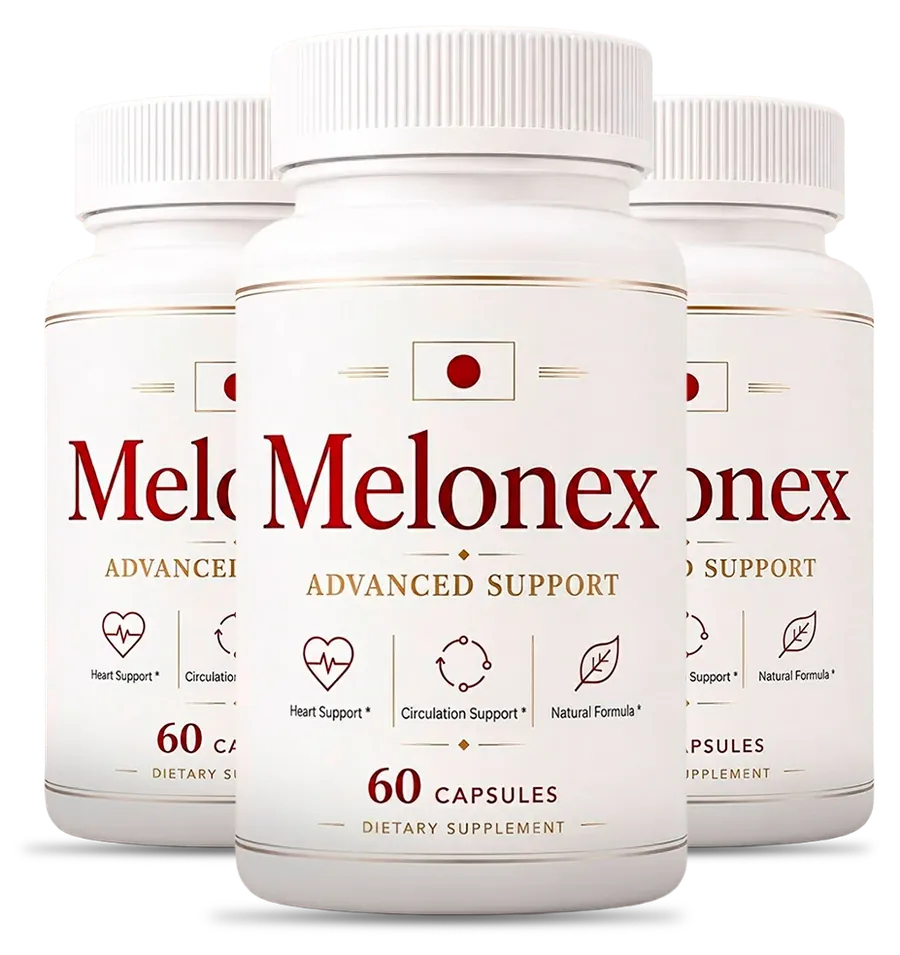
How it works
How does Melonex work? Citrulline, arginine and nitric oxide
Melonex works through one pathway. Its citrulline is turned into arginine in the kidneys, and arginine is the raw material the body uses to make nitric oxide, a signal that relaxes the muscle in blood vessel walls. That is the theory behind the label. No trial has tested Melonex, and its 0.5-1 g a day is far below studied doses.
Written by the Melonex label deskUpdated
The short version01
What does Melonex do in the body?
Melonex supplies three amino acid forms that feed the body's nitric oxide pathway. Citrulline becomes arginine, and arginine is turned into nitric oxide by enzymes in the blood vessel lining (Cziraki 2020, arginine-NO pathway).
Nitric oxide tells the smooth muscle around a vessel to relax. A relaxed vessel is a wider vessel. That is where the label's "Circulation Support*" idea comes from.
The pathway is real and well studied. Whether one or two Melonex capsules move it in a way you would notice is a different question, and no study has asked it.
The pathway in three lines
- Citrulline (line 1 of the blend) is changed into arginine
- Arginine (lines 2 and 3) is the starting material for nitric oxide
- Nitric oxide raises cGMP inside vessel muscle, and the muscle relaxes

Step one02
How does L-citrulline turn into arginine?
L-citrulline turns into arginine mostly in the kidneys. A review found that the liver and gut leave citrulline alone, and the kidneys convert about 83% of it into arginine (Aguayo 2021, L-citrulline review).
That detour matters. Arginine you swallow is partly used up in the gut and liver before it reaches the blood. Citrulline slips past that first stop.
In a dosing study of six regimens, oral citrulline raised blood arginine more than oral arginine did, and the rise grew with the dose (Schwedhelm 2008, citrulline kinetics). The top dose was 3 g twice a day.
Why citrulline sits on line 1
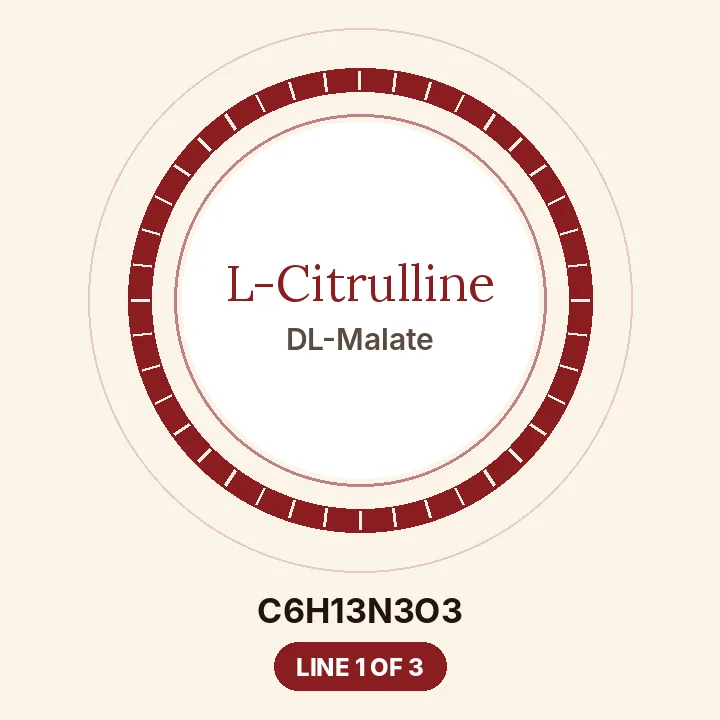
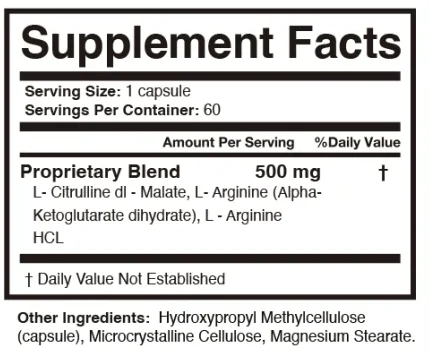
Citrulline DL-malate is listed first, so it is the largest share of the 500 mg blend. In one capsule it holds between about 167 and 500 mg, and part of that weight is malate, not citrulline.
Read the full profile on the L-citrulline DL-malate page.
Step two03
How does arginine make nitric oxide?
Arginine makes nitric oxide through enzymes called nitric oxide synthases. They split arginine into nitric oxide and citrulline, so the cycle can start again (Cziraki 2020, arginine-NO pathway).
Nitric oxide then raises a messenger called cyclic GMP inside the muscle cells of the vessel wall. Most of its effect on large vessels, including widening, runs through that messenger (Cziraki 2020, arginine-NO pathway).
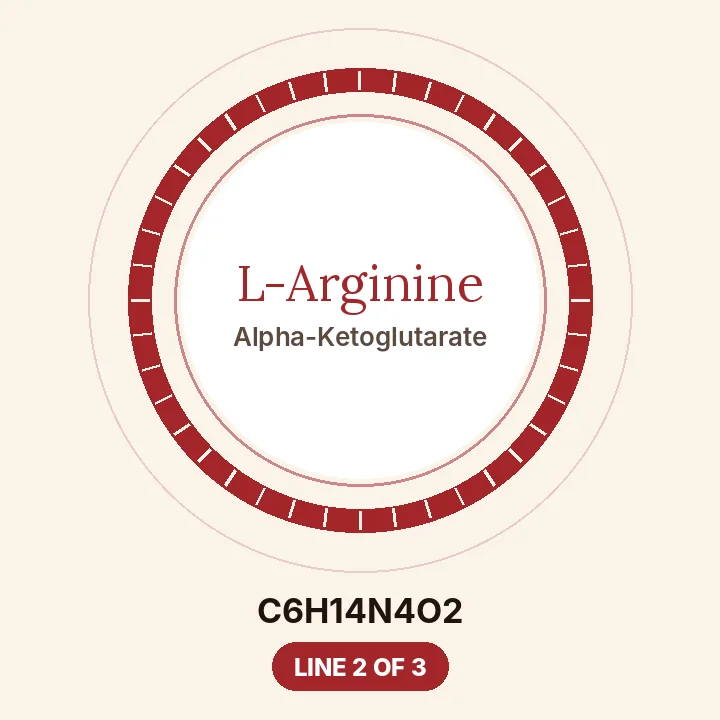
Melonex carries arginine in two salt forms: alpha-ketoglutarate on line 2 and HCl on line 3. Both deliver the same arginine once the salt partner comes off.
Swallow
One capsule with 8 oz of water releases the 500 mg blend.
Convert
The kidneys turn most of the citrulline into arginine.
Make NO
Vessel-lining enzymes turn arginine into nitric oxide.
Relax
Nitric oxide raises cGMP, and the vessel muscle eases.
A diagram, not a measurement. No study has tracked these steps after a Melonex capsule. The basics are explained further in nitric oxide basics.
A known puzzle04
What is the arginine paradox?
The arginine paradox is the finding that extra arginine can improve vessel widening even though the enzyme normally has plenty of arginine already (Cziraki 2020, arginine-NO pathway).
One proposed reason is ADMA, a natural compound that blocks nitric oxide synthase. An enzyme called DDAH breaks ADMA down into citrulline and dimethylamine (Cziraki 2020, arginine-NO pathway).
So more arginine may help the enzyme compete with ADMA. That is a lab and physiology idea, not proof about any capsule.
It does not say that a small amount of arginine raises nitric oxide in everyone. The trials that saw blood pressure changes used grams a day, not milligrams.
The three lines05
Why does Melonex use three forms instead of one?
Melonex uses three forms so that two routes feed the same pathway: citrulline that becomes arginine, plus arginine itself. The label does not explain the choice, so we only describe what each line is.
Each form is an amino acid bound to a partner. The partner adds weight, so the amino acid inside is always less than the line weight.
| Label line | Partner | Per capsule | Role in the pathway |
|---|---|---|---|
| L-Citrulline DL-Malate | Malic acid | About 167-500 mg | Becomes arginine in the kidneys |
| L-Arginine (Alpha-Ketoglutarate dihydrate) | Alpha-ketoglutarate | At most 250 mg | Direct starting material for nitric oxide |
| L-Arginine HCL | Hydrochloride | At most 167 mg | Direct starting material for nitric oxide |
How the two amino acids compare in studies is covered in arginine vs citrulline.

Melonex: from $49 a bottle60 capsules · 2, 3 or 6 bottles · free US shipping on 3 or 6 · 60-day guarantee
See packsDose math06
Is one capsule enough to change nitric oxide?
One capsule is very unlikely to match what research used. A capsule holds 500 mg of blend. Blood pressure trials gave 3 to 9 g of citrulline or 4 to 24 g of arginine a day (Barkhidarian 2019, citrulline meta-analysis) (Dong 2011, arginine meta-analysis).
Take the most generous case. Two capsules give 1 g of blend, and that 1 g also includes the salt partners. The lowest citrulline trial dose is still three times larger.
Even split, 1 capsule
About 167 mg of citrulline malate and about 333 mg of the two arginine salts together.
Even split, 2 capsules
About 333 mg of citrulline malate and about 667 mg of arginine salts in a day.
Trial doses
Citrulline from 3 g a day; arginine from 4 g a day. Grams, not milligrams.
The full line-by-line math, with ceilings, is on the Melonex dose check.
Routine07
How do you take Melonex so the routine stays simple?
Take one capsule a day with an 8 oz glass of water, and no more than two a day. The label gives no time of day and no food rule.
A steady routine is the only fair way to judge any supplement. Keep a home blood pressure log so your doctor sees real numbers, not impressions (AHA, home BP monitoring).
- 01
Check the seal
The label says not to use the bottle if the safety seal is damaged or missing. Look before you open a new one.
- 02
One capsule, 8 oz of water
Swallow one capsule with a full glass of water. That is the label's base dose, and a bottle lasts 60 days at it.
- 03
Up to two a day, never more
The label allows a second capsule a day. Two a day is how the sales page counts its supply: 30 days a bottle.
- 04
Log your readings, review at day 30
Guarantee claims open after 30 days of use and close at 60 days. Share a home blood pressure log with your doctor.
Who should ask first08
Who should not rely on the nitric oxide pathway?
People who have had a heart attack should not start arginine on their own. The VINTAGE MI trial was stopped early after six deaths on arginine and none on placebo (VINTAGE MI trial, JAMA 2006).
The same pathway can stack with drugs that also widen vessels. Blood pressure medicines, nitrates and sildenafil may drop pressure too low when combined with arginine (Mayo Clinic, L-arginine).
Signs of pressure falling too far include dizziness and fainting, and a reading below 90/60 counts as low (NHLBI, low blood pressure).
A capsule that nudges nitric oxide is not a replacement for any prescription. Talk to your doctor or pharmacist before you add Melonex, and never change a dose on your own. More detail is on side effects and interactions.
FAQ09
Questions about how Melonex works
Which Melonex ingredient actually makes nitric oxide?
Arginine does. Nitric oxide synthase enzymes use arginine as their starting material and release nitric oxide plus citrulline (Cziraki 2020, arginine-NO pathway). In Melonex, lines 2 and 3 are arginine, and the citrulline on line 1 helps indirectly by turning into more arginine first.
Does oral citrulline raise blood arginine more than arginine itself?
Yes, in one placebo-controlled dosing study it did. Oral citrulline raised blood arginine more than oral arginine, and the effect grew with the dose, up to 3 g twice a day (Schwedhelm 2008, citrulline kinetics). Melonex holds far less citrulline than that.
How long before the Melonex ingredients could show an effect?
Nobody knows for Melonex, because it has not been tested. In arginine trials, results held up in studies lasting 4 weeks or more (Dong 2011, arginine meta-analysis). Sports studies gave citrulline at least 30 minutes before testing, at 3 g or more (Trexler 2019, citrulline exercise).
Does Melonex work like sildenafil?
No. Sildenafil is a prescription drug, while Melonex is an amino acid supplement. They can push in the same direction, though, and arginine with sildenafil may lower blood pressure too far (Mayo Clinic, L-arginine). Ask your doctor before combining them.
Is the nitric oxide from arginine the same as a nitrate medicine?
No. Nitrate medicines such as nitroglycerin are prescription drugs for chest pain. They must never be taken with sildenafil (MedlinePlus, sildenafil), and arginine with nitrates may also drop blood pressure too low (Mayo Clinic, L-arginine). Anyone on a nitrate should ask their cardiologist first.
Does taking two capsules double the effect?
Two capsules double the blend to 1 g, which the label allows as its maximum. That is still well below the 3 g or more used in citrulline studies (Barkhidarian 2019, citrulline meta-analysis). Taking more than two goes against the label, so do not try to close the gap.
What is ADMA, and why does it come up with arginine?
ADMA is a natural compound that blocks the enzyme that makes nitric oxide. An enzyme called DDAH breaks it down into citrulline (Cziraki 2020, arginine-NO pathway). It is one proposed reason extra arginine might help some people, but it has not been studied with Melonex.
Who wrote this10
Written and reviewed by
Pages built from the label, the sales page and linked NIH, FDA, AHA, CDC, FTC and peer-reviewed sources.
Last updated . Read our editorial standards and how we check reviews. This website is run by a USA authorized Melonex retailer, not by the manufacturer or the distributor. We earn money when you buy through our order links.
Keep reading
More about Melonex
USA authorized Melonex retailer
Ready to try Melonex?
Check your medicines first, then pick a pack. Three or six bottles ship free in the US and cost less per bottle, and the 60-day guarantee opens after 30 days of use.
- Secure checkout
- 60-day guarantee
- Ships from the U.S.